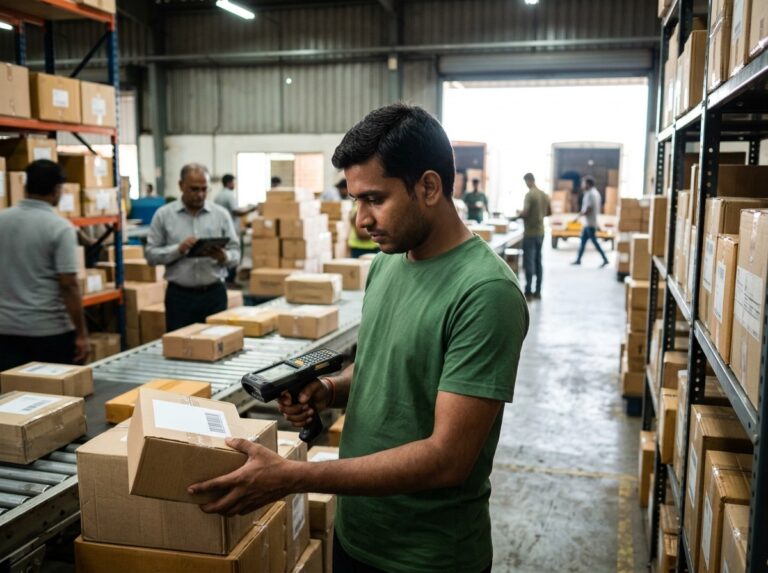
Walk into many small and mid-sized manufacturers, whether a machine shop in Ohio, a fabricator in the West Midlands, a plastics moulder in Bavaria or a toolmaker outside Melbourne, and you often see the same picture. Enquiries arrive by email and phone, quotations live in Word, job cards are on paper, stock is tracked in Excel and delivery commitments sit in the owner’s head. It works until volumes grow. Then orders slip, rework increases and customers start chasing.
Large ERP suites are expensive, slow to implement and designed for big companies with dedicated IT teams. For many SMEs, custom software built around the way your shop floor actually works is the better fit: you pay for what you use, and your team does not have to bend its process to suit a generic system.
Common problems in growing manufacturing businesses
- No single view of which orders are pending, in production or ready to ship
- Raw material shortages discovered only when a job is about to start
- Machine and operator loading planned on whiteboards or in someone’s notebook
- Quality records and inspection reports scattered, or missing when an auditor asks
- Delivery dates promised without knowing real capacity
- Owners and managers spending evenings compiling reports by hand
If several of these sound familiar, you are probably at the point described in our post on signs your business has outgrown spreadsheets.
What manufacturing software can include
Every factory is different, so the modules below are a menu, not a package. Most SMEs start with two or three and add more over time.
Sales and orders
An enquiry register, a quotation builder with costing for material, machine time, finishing and overheads, purchase order entry and order status tracking for each customer. Sales staff can answer “where is my order?” in seconds instead of walking to the shop floor.
Production planning and job cards
Digital job cards with routing, operations, machines and operators; work-in-progress tracking at each stage; and alerts when a job falls behind schedule. Supervisors see machine loading at a glance and can reschedule before a delay becomes a missed shipment.
Inventory and purchasing
Stock of raw material, bought-out parts, consumables and finished goods; purchase orders to suppliers; low-stock alerts; and batch, lot or heat number traceability from incoming material all the way to the finished part.
Quality
Incoming, in-process and final inspection records, non-conformance and corrective action tracking, and printable inspection reports for customers. Having records in one place makes audits for ISO 9001, IATF 16949, AS9100 or ISO 13485 far less painful.
Shipping and invoicing
Packing lists, delivery notes, commercial invoices with the right VAT or sales tax treatment, export documents where needed, and integration with the accounting package you already use, such as QuickBooks, Xero or Sage.
Dashboards
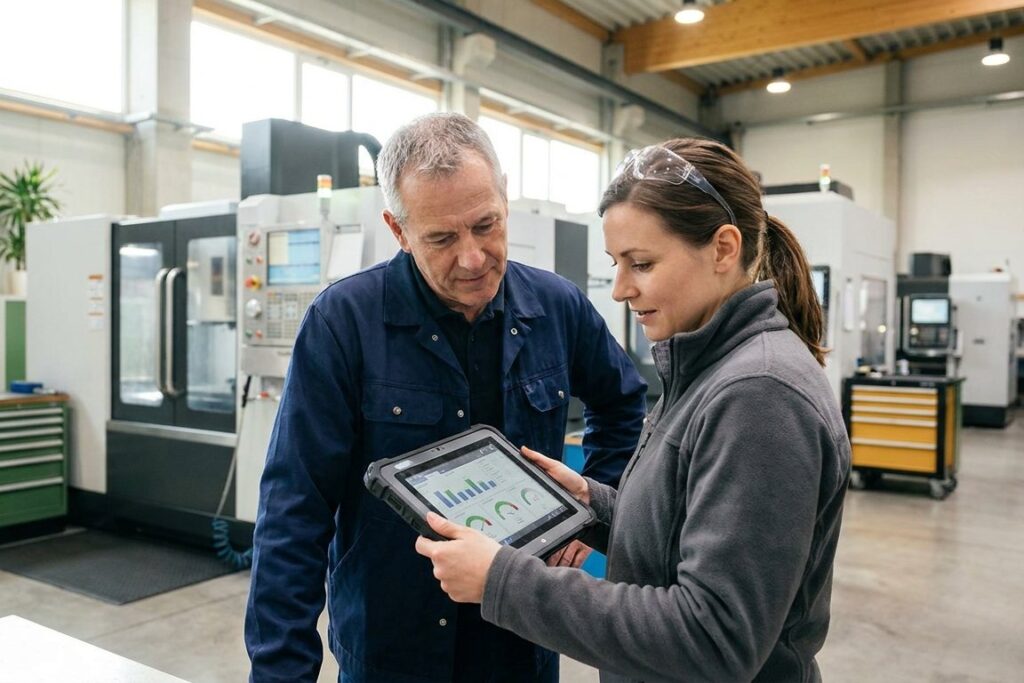
A live view of orders, work in progress, delays, stock levels and outstanding payments on desktop and mobile, so owners can make decisions without waiting for a weekly report.
How to adopt software without disrupting production
- Start with one pain point, such as job cards or inventory, and go live quickly. An early win builds confidence across the team.
- Involve supervisors and operators in designing the screens, so they are simple enough to use with gloves on and a machine running.
- Use tablets or phones at workstations instead of paper, with large buttons and barcode or QR scanning where it helps.
- Add modules in phases as people get comfortable, rather than switching everything on at once.
- Run old and new side by side briefly for critical processes, then retire the spreadsheets for good.
Custom software or an off-the-shelf ERP?
Off-the-shelf systems can work well if your processes are standard and you are willing to adapt to them. Custom software makes sense when you have a distinctive way of quoting, routing or inspecting, when licence fees per user add up quickly, or when you need to connect tools you already rely on. A good partner will tell you honestly which route suits you.
Why manufacturers choose Vimansoft
- We know manufacturing businesses. We have built websites for CNC machining, tooling, forging, plastics, heat treatment and industrial equipment companies, and understand how they quote, produce and deliver.
- Software built around your process, not a generic ERP that forces you to change how your shop floor works.
- Proven in daily operations: our courier management software runs every day at 6+ courier companies in India, including international shipments, built with the same approach.
- Fixed scope and fixed price agreed up front, with phased delivery, regular demos and video calls on Zoom, Google Meet or Microsoft Teams in your time zone.
- Website and software together: RFQs from your website can flow straight into your enquiry register. See our website features that win RFQs.
Explore our custom software development services or read how we work with overseas clients.
Tell us how your shop floor works
Vimansoft Technologies has helped 200+ businesses since 2009 with websites, custom software, mobile apps and digital marketing. Tell us what you need and get a free, no-obligation plan and quote.

Vimansoft Technologies designs websites and builds custom software, mobile apps and digital marketing campaigns for startups and SMEs in the Americas, the UK, Europe, Australia and New Zealand. We have helped 200+ businesses since 2009.